


Skip to content
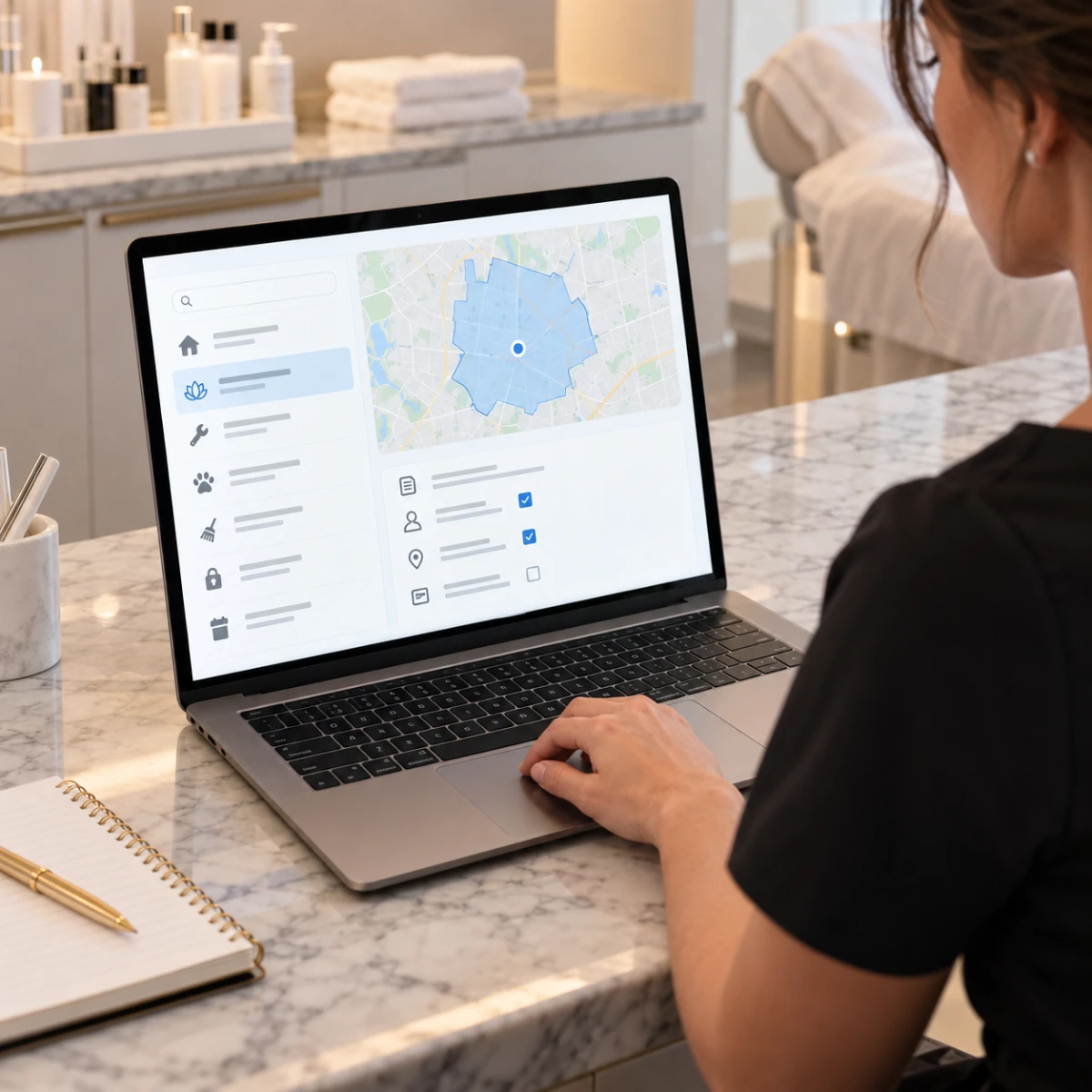
Med spa owner reviewing local advertising eligibility with a marketing advisor
Google Local Services Ads for Med Spas

Local Services Ads for Med Spas Start With Eligibility

Google Local Services Ads may create an additional source of calls or messages for an eligible practice. They are not universally available to medical spas, and an adjacent category should never be used unless it truthfully describes the business.

Top Medspa Marketing helps medical spas, plastic surgery practices, and related aesthetic or wellness businesses evaluate current eligibility, prepare accurate information, configure available settings, route leads, and measure whether LSA deserves a place in the wider marketing plan.

  • Eligibility checked before recommendation
  • Accurate category and service selection
  • Business consistency and profile preparation
  • Lead routing and quality review
Channel fit

Can Your Practice Use Local Services Ads Truthfully?

The first question is not how much budget to spend. It is whether the practice has an accurate eligible category in the market it serves.

The review should answer:

  • What is the practice’s actual business type?
  • Which treatments or professional services does it genuinely provide?
  • Does Google currently offer an accurate category in that location?
  • Does the practice have the required business and professional documentation?
  • Are its website, Google Business Profile, licenses, contact details, and ownership information consistent?
  • Can the team monitor calls or messages and record lead outcomes?
  • Would Google Search Ads or local SEO provide a better path if LSA is unavailable?

An eligibility assessment can lead to one of three responsible conclusions:

The practice appears eligible and should prepare the required information.

Eligibility remains uncertain and must be confirmed through Google’s current process.

No accurate category is available, so the practice should use a different channel.

The third conclusion is not a failed assessment. It protects the business from inaccurate representation and wasted setup work.

Med spa owner reviewing Local Services Ads eligibility with an advisor
Readiness

Access to LSA Is Not the Same as Readiness for LSA

An eligible listing can still underperform when calls go unanswered, messages sit in an inbox, services are described inaccurately, or the practice cannot distinguish relevant inquiries from poor-fit contacts.

Before launching, the owner should know:

  • Who receives each call or message?
  • What happens after a missed call?
  • How quickly can the practice respond during advertised hours?
  • Which services and locations can the team actually support?
  • How will geographic and treatment fit be evaluated?
  • Where will qualification and consultation status be recorded?
  • Who will review irrelevant, duplicate, spam, or solicitation contacts?
  • When should the budget or schedule be reduced because the team lacks capacity?

Lead response is part of the advertising system. LSA management cannot compensate for an unmonitored phone, inaccurate hours, or an undefined follow-up process.

Med spa front office team preparing to respond to local advertising leads
Definition

What Are Google Local Services Ads?

Google Local Services Ads are local paid placements available to eligible businesses, categories, and markets. They can appear when people search for a relevant nearby service and may allow the user to call, message, or use another contact method available for that category.

Google generally describes LSA as a lead-based product rather than a standard pay-per-click campaign. The exact contact formats, screening steps, billing rules, badges, and management controls can vary by category, vertical, market, and current program rules.

Local Services Ads are separate from standard Google Search Ads. LSA uses its own eligibility, category, profile, verification, budget, ranking, and lead-management system.

The responsible starting point is to check the current Google eligibility process using the practice’s real business information.

Eligibility

Are Medical Spas Eligible for Local Services Ads?

Reviewed October 22, 2026

Local advertising eligibility review for a medical aesthetics practice

There is no universal answer for every med spa.

Google’s current United States documentation lists several potentially related categories, including Facial Spa, Hair Removal Service, Dermatologist, Plastic Surgeon, and Weight Loss Service. A general Medical Spa category is not currently shown on the official list reviewed for this brief.

That does not authorize a med spa to select whichever related category is available. The category must accurately describe the legal business, professional service, licensing, and actual work performed.

A plastic surgery practice may have a different eligibility path from a nonsurgical med spa. A practice offering medical weight loss may have a different category and verification process from a facial spa or hair-removal business. Availability can also differ by market.

Google makes the final eligibility and participation decisions. Category lists and rules can change, so availability must be checked for the specific business at the time of planning.

Scope

What LSA Eligibility Assessment and Management Includes

01

Eligibility and Category Review

We begin with the legal and public business name, physical location, service area, ownership, business model, services, professional status, licenses, Google Business Profile, website, and available categories.

If no accurate category is available, the recommendation may be to use Google Search Ads, local SEO, Meta Ads, or another appropriate channel instead.


02

Business Consistency and Verification Preparation

Eligible businesses may need to supply business, owner, license, insurance, professional, location, or other information required by the current onboarding process.

The practice is responsible for providing truthful and current documentation. We can help identify inconsistencies and organize the process, but we do not create, alter, or misrepresent eligibility documents.

03

Profile, Services, and Service-Area Setup

Available profile settings may include the business name, contact details, category, services, location or service area, hours, photos, budget, and lead-delivery preferences.

Every selection should reflect the real practice. A larger service area, longer schedule, or broader service list does not automatically produce more useful leads.

04

Budget, Schedule, and Lead Routing

Budget and availability should reflect current lead costs, market size, treatment priorities, consultation capacity, staff coverage, and the practice’s ability to respond.

Lead routing should define who receives inquiries, which phone or inbox is monitored, how missed contacts are handled, and how outcomes are recorded.

05

Lead Review and Ongoing Management

Lead review may consider requested service, category alignment, geographic fit, contact success, qualification, consultation booking, spam, solicitation, duplicates, and outcome by service or market.

Available lead feedback, credit, dispute, or reporting options can change. Leads should be managed according to the current platform controls rather than an assumed reimbursement policy.

06

Coordination With the Wider Marketing System

LSA should be measured separately while still being understood alongside paid search, local SEO, website conversion, reviews, and other lead sources.

Platform-reported leads should not automatically be described as qualified inquiries, consultations, or new patients.

Verification

Verification Starts With Consistent Business Information

The Local Services Ads profile, Google Business Profile, website, licenses, and supporting documents should describe the same legitimate business.

Important information may include:

  • Legal and public-facing business name
  • Physical address or permitted service area
  • Phone number and monitored contact method
  • Business hours
  • Website URL
  • Categories and services
  • Provider names and professional titles
  • License and ownership details where required
  • Location and booking information

Conflicting information can confuse prospective patients and complicate screening or verification.

Consistency does not mean forcing every platform to use identical wording. It means that core business facts do not contradict one another.

Med spa owner checking practice information for local advertising verification
Lead quality

Lead Quality Matters More Than the Platform Lead Count

LSA may report a call or message as a lead, but the practice still needs to understand what happened next.

A useful review process may track:

  1. Charged or recorded platform lead

  2. Valid contact or completed conversation

  3. Relevant requested service

  4. Geographic and business fit

  5. Qualified consultation opportunity

  6. Booked consultation when reliable data is available

  7. Outcome and reason when the inquiry does not progress

This distinction prevents the practice from evaluating the channel only by lead volume or cost per lead.

A higher-cost lead that becomes a qualified consultation may be more useful than several inexpensive calls for services the practice does not offer.

Med spa team reviewing the quality of Local Services Ads inquiries
Local channels

Local Services Ads, Google Search Ads, and Local SEO Are Different

Lead-based placements

Local Services Ads

LSA can provide prominent local lead placements for businesses that meet current category, market, and onboarding requirements. It uses a separate profile and lead-based system with fewer traditional keyword and landing-page controls.

Keyword campaigns

Google Search Ads

Med spa PPC uses keywords, ad copy, landing pages, location targeting, bidding, and conversion actions. Search Ads may be available even when the business lacks an accurate LSA category, subject to current Google Ads policies.

Unpaid local visibility

Local SEO

Local SEO for med spas improves the website, Google Business Profile, reviews, listings, local content, and other signals that support unpaid local visibility.

An eligible practice may use more than one of these channels, but budgets, controls, and lead outcomes should be evaluated separately.

LSA is not a shortcut around weak local information, poor reviews, an unclear website, or slow lead handling.

After the click or call

How SEO, AEO, and GEO Support the Research After an LSA Click or Call

Local Services Ads do not directly improve organic rankings, AEO visibility, or AI citations. They are a paid local advertising product.

However, a prospective patient may see an LSA listing and then research the practice before making a decision. The website should make the business, location, treatments, providers, and consultation process easy to understand.

These disciplines can support trust and verification during the wider decision journey, but they do not establish LSA eligibility, verification status, or ad placement.

Compliance

Responsible Categories, Claims, and Patient Information

The practice should use only categories and services it can support with its real operations and documentation.

Profile setup and lead handling should also account for:

  • Accurate professional titles
  • Current licenses and business information
  • Truthful treatment descriptions
  • No guaranteed medical outcomes
  • Transparent offer terms
  • Appropriate privacy practices
  • Careful handling of health information
  • Authorized account access
  • Current platform requirements
  • Applicable legal and professional obligations

Google eligibility, screening, or a badge does not establish medical quality or guarantee compliance with every law or professional rule. The practice should obtain qualified guidance for its specific obligations.

Process

Our Med Spa Local Services Ads Process

  1. Check Eligibility

    We review the practice’s real category, services, location, documentation, and current Google availability before recommending the channel.

  2. Review Business Consistency

    The website, Google Business Profile, contact information, location details, licenses, and account ownership are checked for material gaps or conflicts.

  3. Prepare the Application and Profile

    The practice supplies required information and documentation. Available categories, services, areas, hours, assets, budget, and lead settings are configured accurately.

  4. Complete Google’s Onboarding Requirements

    The practice follows the screening and verification steps shown for its category and market. Timing, approval, badge status, and continued participation remain under Google’s control.

  5. Establish Budget and Lead Handling

    Budget, schedule, service area, contact delivery, response responsibilities, and outcome tracking are defined before performance is evaluated.

  6. Launch and Review Lead Quality

    Available leads are reviewed for service relevance, geographic fit, contact success, qualification, and consultation outcomes.

  7. Optimize Within Available Controls

    Budget, hours, services, areas, profile details, response processes, and coordination with other channels are adjusted using current platform options and reliable lead-quality information.

Measurement

What We Measure

Depending on the available account and practice data, reporting may include:

  • Budget and spend
  • Platform-recorded or charged leads
  • Cost per lead
  • Calls and messages
  • Contact rate
  • Relevant and qualified inquiries
  • Cost per qualified inquiry when reliable data is available
  • Consultation bookings when reliable data is available
  • Lead quality by service or market
  • Response performance where available
  • Profile, verification, or policy issues

Lead volume should not be evaluated without relevance, qualification, and booking context.

No agency can guarantee eligibility, approval, badge status, placement, lead volume, lead quality, cost per lead, consultations, or patient revenue. Google controls program access, categories, screening, ranking, charges, and available management features.

Trust

E-E-A-T in the Local Advertising Journey

E-E-A-T is not an LSA setting or ranking guarantee. Verifiable experience, expertise, authority, and trust can help a prospective patient evaluate the practice after encountering its listing.

Trust-supporting information can include:

  • Named providers and verified credentials
  • Accurate location and contact information
  • Real practice photography
  • Clear treatment information
  • Genuine reviews
  • Transparent consultation options
  • Consistent business profiles
  • Appropriate privacy and policy information

The LSA profile should not make claims the website, documentation, providers, and real business cannot support.

FAQ

Med Spa Local Services Ads FAQs

Are med spas eligible for Google Local Services Ads?

Some medical spas or related businesses may qualify under an accurate category in an eligible market, while others may not. Eligibility depends on Google’s current categories, location, services, documentation, and onboarding requirements. It must be checked for the specific business and market.

Is there a universal Medical Spa LSA category?

Google’s United States category list reviewed on October 22, 2026 did not show a universal Medical Spa category. Related categories may be available, but a practice should use only a category that truthfully describes its actual business and services.

Are plastic surgeons eligible for Local Services Ads?

Plastic Surgeon appears on Google’s current United States category list, but category inclusion does not guarantee that every practice or market will be eligible. The practice must complete the current eligibility and onboarding process using accurate business and professional information.

How are Local Services Ads different from Google Search Ads?

Local Services Ads use a separate eligibility, profile, onboarding, lead, budget, and ranking system. Google Search Ads use keywords, ads, landing pages, bids, and conversion actions. A practice may qualify for one, both, or neither under current platform rules.

Do Local Services Ads charge per click or per lead?

Google generally describes Local Services Ads as a lead-based product. Formats, charges, lead-credit rules, and available features can vary, so the current terms shown for the business’s account, category, and market should be reviewed before launch.

Does a practice need a Google Business Profile for LSA?

Google Business Profile and Local Services Ads are distinct systems, but accurate and consistent Google business information can support onboarding and prospective-patient trust. Current requirements should be confirmed during the eligibility review.

Can an agency guarantee LSA approval or a Google badge?

No. Google controls eligibility, screening, verification, badge availability, ranking, and continued participation. An agency can help prepare accurate information and manage available settings but cannot guarantee approval or badge status.

How much should a med spa budget for LSA?

Budget depends on the market, category, lead costs, available lead volume, treatment value, consultation capacity, response readiness, and lead quality. Early budgets should support controlled evaluation without assuming a fixed number of bookings.

Can Local Services Ads guarantee booked consultations?

No. LSA may generate calls or messages, but qualification and booking depend on service fit, location, pricing, availability, reputation, response, and consultation handling.

Med spa owner and advisor evaluating local advertising market fit
Eligibility Before Campaign Setup

Find Out Whether Local Services Ads Fit Your Practice and Market

Top Medspa Marketing can review your business category, services, location, current Google availability, business consistency, lead-handling readiness, and alternative channels before recommending an LSA setup.

If no accurate category is available, the assessment should identify a more appropriate path instead of forcing the practice into the wrong one.